
Painting Plaster Walls: Cracks, Repairs and Preparation
Where plaster is present, cracks and damaged areas can mean more than everyday spackling. Many rooms only need nail-hole patching — price the walls you have, not a generic room count.
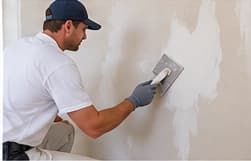
Plaster versus drywall in painting decisions
Drywall is a gypsum panel system with taped joints. Traditional plaster is built up in coats over lath or similar substrate. From a painting standpoint, the questions are the same: Is the surface sound? Are cracks stable or recurring? Are there loose or soft areas? What preparation is needed before primer and finish coats?
Some homes include plaster, previous repairs, or mixed wall systems. That is worth identifying during the estimate walkthrough. It is not accurate to assume every local home has plaster.
Hairline cracks and recurring cracks
Hairline cracks are common at corners, along joints, and over older repairs. Some are cosmetic and respond to careful filling, sanding, and priming. Recurring cracks — especially those that reopen after previous repairs — deserve more caution. Paint and patch compounds do not correct ongoing movement.
Damaged, loose, or bulging plaster
Soft spots, hollow areas, and bulging plaster can indicate failed bond or deeper damage. Those conditions should be evaluated before finish painting. In some cases the unstable material needs repair or replacement rather than a surface skim alone. Appearance alone does not prove whether the cause is age, moisture, impact, or structural movement.
Moisture warnings
Stains, soft plaster, peeling, or repeated damage near ceilings, exterior walls, or plumbing runs may point to moisture. Active leaks and unresolved dampness should be corrected before relying on paint. Stain-blocking primer can help with old, dry stains once the source is addressed; it is not a substitute for fixing an active problem. Stained ceilings are covered under ceiling painting.
Patching, smoothing, and skim coating
Patching restores local defects. Smoothing reduces ridges and telegraphing under finish paint. Skim coating may be appropriate where broader surface irregularities remain after wallpaper removal or earlier repairs. These steps belong in the preparation discussion because they change labor and timeline. See interior painting preparation.
Wallpaper-removal damage
Removing wallpaper can leave adhesive residue, torn face paper, or gouged plaster. Those walls often need more than a quick prime-and- paint. Ask whether adhesive removal, sealing, patching, or skim work is included before comparing estimates.
Primer on repaired and older surfaces
Repaired areas, stained areas, and porous or chalky surfaces may need primer so the finish coats bond and cover evenly. Glossy older coatings can also need adhesion preparation. Primer choices should follow the wall you have, not a one-line promise.
Older homes and lead-safe considerations
Disturbing painted surfaces in pre-1978 homes can raise lead-safe questions. Ask how sanding, scraping, or repair dust will be handled before work starts. More questions to ask are under choosing an interior painter.
When another problem should be corrected first
Painting is not the right next step when moisture is active, when plaster is unstable, or when a crack pattern suggests unresolved movement that needs a different trade. A clear estimate separates paintable preparation from work that should wait.
For what usually changes the number, see interior painting cost and comparing painting estimates, or request an estimate.
Questions about plaster walls or repairs?
Call to talk about the rooms you want painted, the condition of the walls, and what you want included.