
Painting Interior Trim, Doors, Baseboards and Crown Molding
Baseboards, crown, window casing and doors take real time. If an estimate says “paint the rooms” without naming trim and doors, ask what is actually included.
What “trim” usually includes
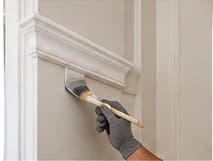
In residential interiors, trim often means baseboards, crown molding, window casing, door casing, chair rails, and similar profiles. Interior doors are part of the same decision and should be named clearly in the estimate — not assumed.
- Baseboards and shoe molding
- Crown molding and ceiling transitions
- Window casing and sills
- Door casing and jambs
- Interior doors (faces, edges, frames when included)
- Detailed or historic profiles that slow cutting-in
Interior doors: why they change the work
Interior door painting is easy to leave out of a room price and easy to underestimate. A door is not one flat wall. Each door can mean both faces, edges where they are part of the work, the frame, and the casing around it. Panel doors, French doors and closet doors take more brushing and cut lines than a flat slab. Hardware, hinges and existing coatings all affect prep.
Ask which doors are included, which sides get paint, whether edges are included, and whether closet or bifold doors are priced with the room or separately. Door count alone can move labor even when the floor plan looks the same.
Why detailed trim changes labor
Flat walls can be rolled efficiently. Profiled trim and doors require more brushing, careful cut lines, and more time around corners and joints. The more complex the molding, the more preparation and finish work show. That is one reason trim-and-door estimates can look higher than wall-only numbers for the same floor plan.
Preparation, adhesion and older coatings
Trim and doors often carry older coatings, including oil or alkyd layers in older homes. Adhesion depends on cleaning, dulling glossy surfaces, repairing damaged edges, and using an appropriate primer where needed. Skipping preparation is a common way to get a lower price and a less durable finish. See interior painting preparation.
Finish and sheen choices
Trim and door sheens are often higher than wall sheens because durability and cleanability matter on doors and baseboards. Sheen also reveals surface defects more readily, which is another reason sanding and filling matter. Confirm the intended sheen in the written estimate so comparisons stay honest.
Walls and trim can also share a color while using different finishes — or keep contrasting colors. If you are weighing that choice, see whether to paint walls and trim the same color.
Ask these trim questions
- Are baseboards and crown included in every room?
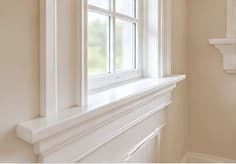
- Are window and door casings included?
- Which interior doors are painted, and on which faces?
- Are door edges and frames included?
- Are closet or bifold doors included?
- What preparation is assumed for glossy trim and doors?
- What sheen is specified for trim and doors?
Name the trim package in the estimate
Trim should be explicitly identified in estimates. “Paint living room” can mean walls only, or walls plus baseboards, crown, casings, and doors. Those versions are not comparable. See comparing painting estimates and interior painting cost.
Older trim and lead-safe questions
Sanding or scraping older trim coatings in pre-1978 homes can involve lead-safe considerations. Ask what methods will be used before work begins. More questions to ask are on choosing an interior painter.
Want trim and doors priced clearly? Request an estimate.
Need trim and doors in the estimate?
Call to talk about the rooms you want painted, the condition of the walls, and what you want included.