
How to Choose an Interior Paint Color for Your Room
A paint color can look completely different in your room than it did on a screen, a small swatch or somebody else’s wall. Daylight, flooring, trim, furniture and even the view outside the windows can change how the color reads. Before painting an entire room, look at the color where it will actually be used.
Updated:
Start With the Room, Not the Paint Chip
Photographs, screens and paint-store lighting are useful starting points. They cannot show exactly how a color will appear once it is on your walls.
Look at the color against what is already in the room: natural daylight, the lights you use at night, flooring, wood tones, tile or stone, trim, furniture and the rooms you see through the doorway. A color that looked quiet in the store can read warmer, cooler or stronger at home.

How Natural Light Changes Paint Color
Rooms that receive different daylight can make the same paint color look different. Exposure is one reason to sample the color in the room — not a rule that certain colors belong in certain exposures.
- North-facing
- Often cooler, more indirect light. Some colors may look quieter or cooler than expected.
- South-facing
- Often stronger, warmer daylight. Undertones may show more clearly at mid-day.
- East-facing
- Stronger morning light. The same sample can look different later in the day.
- West-facing
- Stronger later-day light. Check the sample again in the afternoon and evening.
Look at your shortlist under the light your room actually gets. Keep your own preference in the decision.
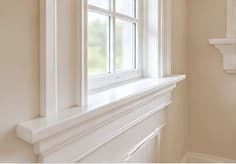
Windows Can Bring Outside Color Inside
Depending on the room, light coming through a window can pick up color from trees, grass, brick, neighboring buildings, awnings or other exterior surfaces. A room surrounded by greenery, for example, may receive some reflected green light.
That does not happen the same way in every house. If a sample looks oddly green or warm only near a particular window, step outside and look at what the light is passing.
Why Undertones Become More Obvious
Colors sold or described as white, beige, gray or greige can still lean warmer, cooler, pinker, greener or yellower once they are on the wall. Surrounding finishes and light often pull those differences forward.
Do not choose a neutral by its name alone. Those names cover many different colors. Compare the sample with permanent finishes in the room — flooring, stone, tile, woodwork and the trim you plan to keep — instead of deciding from the chip name in the store.
Look at the Color More Than Once
One glance in the store is not enough. A tiny chip also does not give the same impression as a larger painted sample on the wall.
- View the sample during daylight
- Look again later in the day
- Turn the room’s normal lights on at night
- Look at the sample beside the trim
- Look at it against flooring
- Check it near permanent stone, tile or wood
- Step back and view it from the adjoining room
- Do not rely only on a phone or computer display
Looking for ideas? See the 2027 Colors of the Year, then bring the colors you like back to the actual room before deciding.
Walls, Trim and Doors
Trim does not have to match the walls. Common approaches include contrasting trim, related colors, or the same color on walls and trim. None of those is automatically correct.
Considering one color for both? See what changes when walls and trim share a color. Sheen may still differ — walls and woodwork take different wear. Decide before the estimate so trim, casings and doors are named clearly. More on interior trim painting.


Don’t Forget the Ceiling
The ceiling is part of the color decision. White or off-white is common, but not required. Some projects use a wall-related color on the ceiling instead.
If the ceiling will be painted, decide that before the estimate is finalized when you can — it changes the painting work. See ceiling painting.
Look From the Adjoining Room
Doorways, open floor plans, hallways, stairs and continuous trim mean one room is often seen from another. Colors do not have to match. Still look at how they appear together from normal sight lines before committing.
That matters even more when several rooms are being painted at the same time. Walk the path you actually use — kitchen to hallway, bedroom to bath — with the samples on the walls.
Color Changes Affect the Painting Job
A substantial color change may affect primer needs, coverage, the number of finish coats, cutting around contrasting trim, doors, ceilings and transitions between rooms. Not every change needs the same prep or the same coat count — ask what the estimate includes.
More on interior painting preparation, interior painting cost and comparing painting estimates.
Before You Settle on a Color
- See it in the actual room
- Check it in daylight
- Check it at night with normal room lighting
- Compare it with flooring and permanent finishes
- Look at it beside the trim
- View it from the adjoining room
- Decide what happens with ceilings, trim and doors
- Make the final color decision before the painting schedule requires it
Planning an Interior Painting Project?
If you've narrowed down the rooms and colors you're considering, we can discuss the surfaces, preparation and painting involved.